Earth Overshoots its Resources for 2026 in:
This article is originally published at: Mixed-status Families | California Immigrant Data Portal
For more in-depth information please visit: Home – Mixteco.
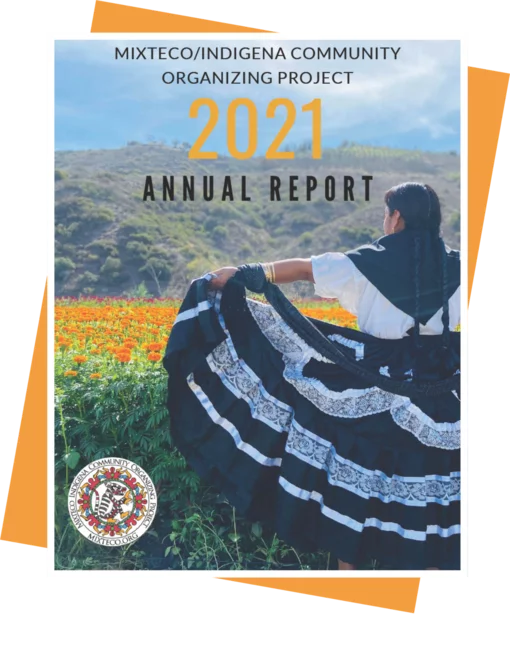
Organizations like MICOP and their partners estimate that there are about 20,000 Indigenous Mixteco migrants from Mexico living in Ventura County in the Central Coast. Many such Indigenous migrants in California have been misrecognized as Latinx and assumed to be Spanish speakers at school and at work, when in reality many are not proficient in either English or Spanish. This has contributed to a lack of access to educational, working, and health infrastructures, even in areas with more concentrated Indigenous migrant populations.
Work by scholars sheds light on the challenges and discrimination that Indigenous youth, in particular, face – particularly in the school system. In this context, it is not uncommon for Indigenous migrant youth to be tracked into special education classes, even when they do not have a learning disability, hindering their academic progression and participation in the U.S. school system. Further, effective communication between parents and schools can often depend on whether translation is available, so parents’ ability to advocate on behalf of their children is often limited by a lack of translation services (or dependent on another family member being available to translate). As highlighted by a 2020 CalMatters article, educational barriers for Indigenous migrant youth were compounded when schools transitioned to remote learning during the height of the COVID-19 pandemic. On top of the existing linguistic barriers, Indigenous youth had to further contend with the digital divide to access class materials and with economic imperatives to work in the agricultural fields when family members experienced job loss or contracted COVID-19. Many youth featured in that article were members of MICOP’s Tequio Youth Group, which focuses on leadership development to promote Indigenous pride, promotes educational attainment, and advocates against bullying. For example, in 2012, members advocated for the implementation of a policy prohibiting the use of derogatory terms used against Indigenous students in local school districts. In 2014 and 2015, youth also partook in the “Fields to College” campaign, advocating for language resources for both students and their parents in the Oxnard Union High School District. In addition, the group established the Tequio Scholarship Fund to provide funding to Indigenous college students in Ventura and Santa Barbara Counties.
In general, it is important to note that shared languages and cultures are critical components of MICOP’s success in building trust with community members – and as of 2023, 85% of MICOP’s staff are from the Indigenous communities the organization intends to serve. To learn more about MICOP, visit their site here. Read more about MICOP’s other efforts during the pandemic here.
Photo credit: MICOP