Global Tipping Points Conference – July 2025
In July of 2025, Global Tipping Points, an organization led by Professor Tim Lenton from the University of Exeter’s Global Systems Institute with the support of more than 160 authors from over 87 institutions in 23 countries, hosted its second annual conference presenting its report on the status of Earth’s tipping points.
“Tipping points” are premised on the concept that the Earth, like our corporeal bodies, is comprised of a certain number of “vital systems”, analogous to our “vital organs,” designed to maintain the “balance of the whole” within a range of “life giving” conditions. The theory holds that so long as only a few of these systems are severely damaged, the planet can bring herself back, given enough time. Similar to a person, if a human experiences a concussion, shock, or say an infection, provided their other vital systems are okay, they’ll make it. But once you start attacking and crippling one too many systems, things start to get bleak.
Non-Linear Systems
Eventually, when you hit one too many vital systems, the patient’s condition does not worsen in a linear progression, that is, the person doesn’t get a bit worse, and then a little worser. Once a certain number of systems go down, the patient takes a very sudden downturn, such that small increment of damage to a system can result in a disproportionately major worsening of the patient’s condition. The phrase “tipping point” refers to those such points.
Because these systems tend to interact, within each system, there are system specific tipping points. So, for example, the polar ice sheets as they melt, wet the surrounding area and ground. Because water conduces heat extremely well, that warms the surrounding ice more and creates a compound effect. However, permafrost, the frozen ground beneath, holds a lot of carbon dioxide. So in addition to the effect on the ocean from the added water of the melting ice, more CO2 is also released. At a certain point, the melt off begins to accelerate until it begins to take off. When that happens, CO2 in the permafrost starts increasing at faster rates and the sea level rises similarly — two tipping points reached simultaneously.
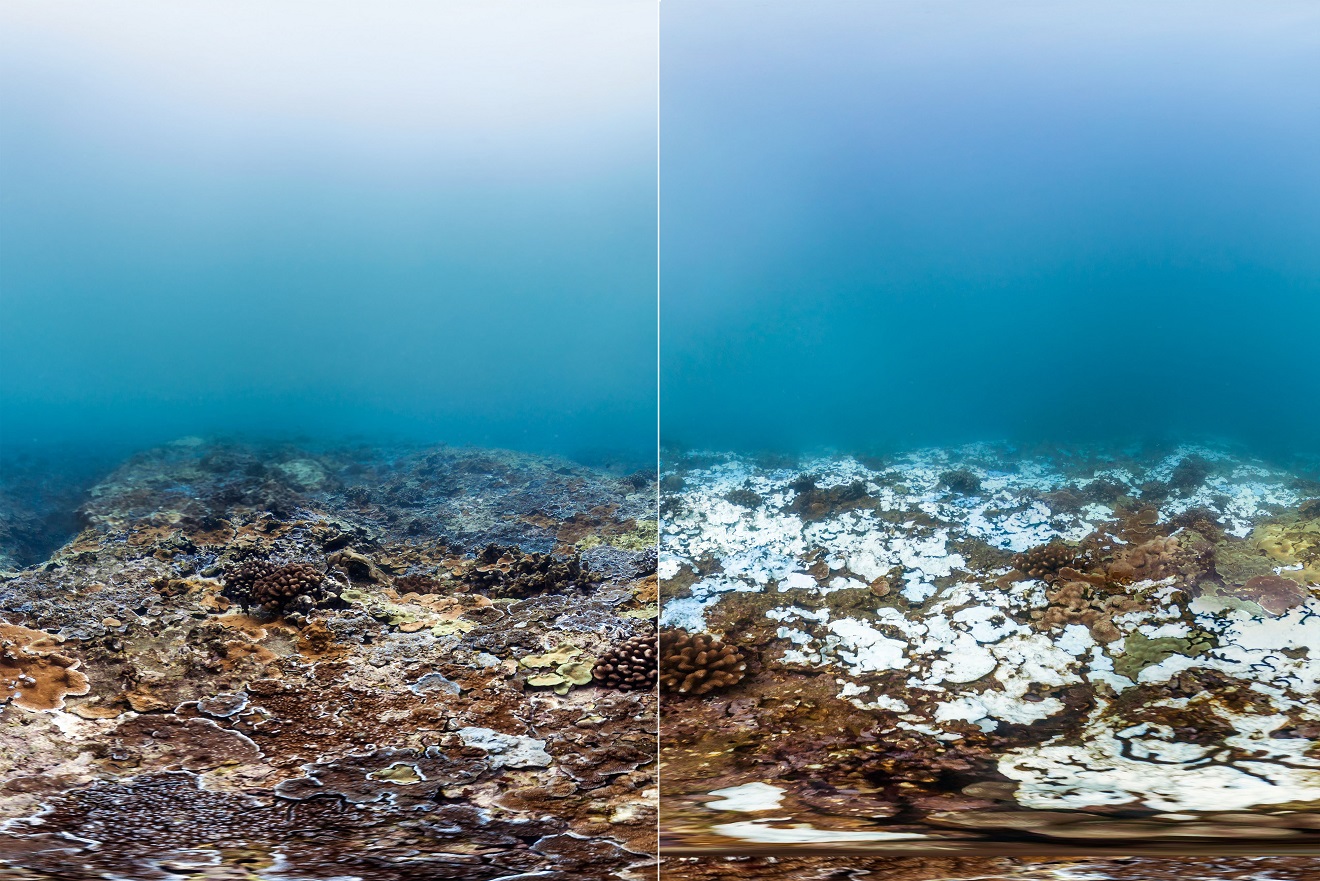
The report this past July came to a conclusion echoed by the lived experience and scientific observations of many: our warm water reefs are among our first major tipping points. Below is the QA PDF from the organization’s website followed by the full report. Forthcoming posts will include how 90% of the Florida Keys’ coral reefs have now been lost, substantiating that indeed this tipping point has been reached per the report and that our equatorial coastal-dependent communities will be among the latest to bear the brunt of our climate crisis.
It is critical to note that the Q&A below does not address coral farming as a mitigation approach, e.g. Coral Vita. Mission Blue Hope Spots is another long term solution for coral reef proximate communities.
If you prefer to listen or watch this information, the TED Talk presented by one of the key scientists is also at the end of this post.
WARM WATER CORAL REEF, CHAPTER Q&A, 13TH OCTOBER 2025
Melanie McField (director of Healthy Reefs for Healthy People), Paul Pearce-Kelly (Zoological Society London), Rosa Maria Roman-Cuesta (Technical University of Munich and the Joint Research Center-Ispra) et al.
Source: Earth System Tipping Points – Global Tipping Points
PDF is available here.
Are you saying that the Tipping Point for coral reefs has been breached?
The tipping point range for warm-water reefs is between 1 to 1.5C of global warming, with 1.2C as the central estimate. Since we’ve 1. already crossed this central estimate (we are currently at ca 1.35C), 2. have already experienced a year (2024) above reefs’ 1.5C upper tipping point threshold and 3. have ample evidence this long-term temperature level will occur within the next decade, we are saying yes: reefs are already reaching a dangerous tipping point and are perilously close to temperature levels that threaten their survival at any meaningful scale.
We already knew coral reefs were in crisis, but the increasing intensity and frequency of ocean heatwaves are accelerating their decline and functional degradation.
There is also a delayed ocean heating response to atmospheric greenhouse gases and temperature level which masks the full impact that current temperature and GHG levels will have on reefs.
What does that mean for the future of reefs?
We’re not saying everything is now lost. It’s a process. Each bleaching event has become more extensive and more extreme in terms of the exposure of heat and impacts. Exceeding the thermal tipping point means an acceleration of on-going reef decline and the loss of the essential ecosystem services they provide (including food security, coastal protection against hurricanes and storm surges, tourism and habitat loss for biodiversity). The stark reality is that we will not retain functional reefs at meaningful scale unless we stabilise global mean temperatures below 1.2C with minimum temperature overshoot. Whether we can avoid irreversible degradation and loss of coral reefs depends on minimising the level and duration
of temperature overshoot through the strongest possible climate change mitigation actions.
When can we expect these changes to happen?
The impacts of excessive temperature on reefs are already being experienced around the world (for example, the recent (2023-2025) fourth global bleaching event has exposed over 80% of the world’s warm-water coral reefs to bleaching levels of temperature stress), but different reefs will have different response times and different impact levels. In general, the cumulative impacts (including non-climate stressors) will be increasingly felt as we
approach and exceed the 1.5 C upper tipping point threshold. Coral reefs face irreversible degradation and loss if we continue with inadequate global temperature targets and insufficient mitigation action.
How will conservation funding be affected by this claim? Should conservation action stop?
Although the situation is certainly dire, we’re not saying we’re at the end of the road. Nonclimate conservation action is more essential than ever to maximise reef resilience against the growing impacts of temperature and ocean acidification stress. Increased funding is urgently needed to minimise overfishing, destructive fishing techniques, waste-water and fertiliser run off, sedimentation and unsustainable coastal development. Extending and fully protecting existing marine protected areas (e.g. no fishing areas) is also needed. As some regions are declining faster and more extensively than others, urgent policy and societal responses are needed to address the ecosystem and livelihood impacts of degraded or non functional reefs, which also require funding. For reefs to have a viable future, it’s essential that all possible conservation support is provided in parallel with stringent climate change mitigation action to return global mean temperature to reefs central, and eventually lower, tipping point threshold levels.
At the time of the 2023 report, we had already passed the 1.2C central threshold for TP for corals.
Why is the claim made now and not before?
In 2023 we already exceeded the 1.2C central tipping point threshold for warm-water coral reefs. However, we were not sure then that we would be so near to exceeding their 1.5C upper tipping point threshold. Year 2024 already gave us a taste of what a 1.5C world would be. Coinciding with that year, and as added evidence from the 2023 report, reefs have been suffering the most extended and severe Global mass coral bleaching event in history (2023 2025), with more than 80% of global coral reefs being exposed to bleaching level temperatures around the world. There was also less awareness of just how severe the 1.5C temperature exceedance overshoot would be in the absence of greatly improved climate change mitigation.
We’re far more certain now than we were in 2023 that the future of coral reefs, as we know them, is profoundly threatened without greatly improved climate change mitigation action and conservation support.
The solution proposed for reefs is to return to their lower 1C threshold, and/or to retain the 1.2C, below the Paris Agreement goal of 1.5C. Correct? Is this feasible?
As coral reef specialists our goal is to assess what’s needed for the sustainability of coral reefs, rather than the feasibility of the mitigation needs. Returning to 1C for a safe planet has plenty of backing up from other sources, including the 350ppm target, a “safe & just” planetary boundary or the work by Breyer et al. (2023), to cite a few. We believe it feasible to return to lower Earth temperatures, if mitigation commitments including short-lived greenhouse gases like methane take place, and if CO2 removals (CDR) at scale through nature restoration are financed. It is a question of scales, means, technological advances and policy will. Natural sinks, above all, need to be retained, protected and enhanced.
Full Report is available here.